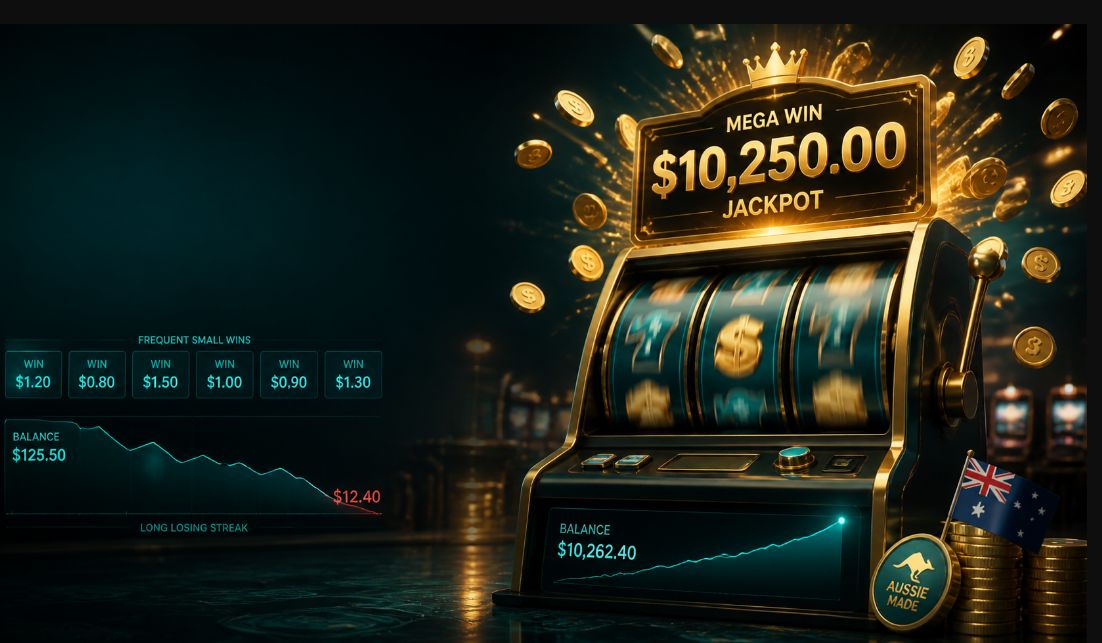
Online pokies come in many forms, but one of the most misunderstood concepts among Australian players is hit frequency. It is often confused with volatility, RTP, or even “luck,” yet it plays a direct role in how long your session lasts and how your bankroll behaves.
If you have ever spun a pokie for what feels like forever without a win, only to suddenly hit a large payout, you have experienced low hit frequency in action. On the other hand, if you regularly see small wins that barely cover your bet, you are playing a high hit frequency game.
Understanding this difference is essential, especially when playing high-volatility pokies. It directly impacts your session length, emotional experience, bankroll management, and overall strategy.



What Is Hit Frequency in Pokies?
Hit frequency refers to how often a pokie machine produces a winning spin. It is typically expressed as a percentage.
For example:
-
A game with a 30% hit frequency means roughly 3 out of every 10 spins result in a win.
-
A game with a 15% hit frequency means wins occur less often, about 1–2 times every 10 spins.
Importantly, a “win” does not necessarily mean profit. Many wins are smaller than your bet and still result in a net loss.
This is where many players get confused. A pokie can feel active and rewarding due to frequent wins, but still slowly drain your balance over time.
High Volatility vs Hit Frequency: Not the Same Thing
Volatility (also called variance) measures how a game distributes its payouts:
-
Low volatility: frequent small wins, rare big payouts.
-
High volatility: rare wins, but potential for large payouts.
Hit frequency, on the other hand, measures how often wins occur, regardless of size.
This creates four possible combinations:
-
High hit frequency + low volatility: steady, small returns.
-
High hit frequency + high volatility: frequent wins with occasional big spikes.
-
Low hit frequency + low volatility: less common but modest payouts.
-
Low hit frequency + high volatility: long dry spells followed by large wins.
The last category is where many modern online pokies sit—and where session length becomes unpredictable.
The Classic Scenario: 200 Spins Without a Meaningful Win
Many high-volatility pokies are designed to build tension. You may go 100–200 spins with minimal returns, often receiving only small “teaser” wins.
During this phase:
-
Your balance steadily declines.
-
Bonus features rarely trigger.
-
Wins feel insignificant compared to your bet size.
This is typical of a game with:
-
Low hit frequency
-
High volatility
-
Strong bonus-driven payout structure
These games rely on large features or jackpots to deliver their RTP over time.
Examples of gameplay behaviour:
-
You spin at AUD 1 per spin.
-
You receive occasional AUD 0.20–0.50 wins.
-
Your balance drops from AUD 100 to AUD 20 before any significant event.
Then suddenly:
-
A bonus round hits.
-
You win AUD 150 or more in one sequence.
This pattern creates the illusion that the game is “due,” but in reality, each spin is independent.
High Hit Frequency Games: The Illusion of Stability
Now compare that to a high hit frequency pokie.
In this case:
-
You win frequently, sometimes every 2–3 spins.
-
Wins are often small, such as AUD 0.60 on a AUD 1 bet.
-
Your balance declines slowly rather than sharply.
This creates a very different experience:
-
Sessions feel longer and more stable.
-
You remain engaged due to constant feedback.
-
You may underestimate how much you are losing.
Example:
-
Starting balance: AUD 100
-
Bet: AUD 1
-
Frequent wins of AUD 0.30–0.80
-
After 150 spins, balance might still be around AUD 60–70
Despite constant “wins,” you are still losing overall—but at a slower pace.
How Hit Frequency Directly Affects Session Length
Session length is primarily determined by three factors:
-
Bet size
-
Bankroll
-
Hit frequency
Here is how hit frequency influences session duration:
Low Hit Frequency (High Volatility)
-
Longer losing streaks
-
Faster balance depletion during dry spells
-
Shorter sessions unless a big win occurs
-
High risk of busting quickly
High Hit Frequency (Lower Volatility)
-
Frequent returns extend playtime
-
Slower bankroll decline
-
Longer sessions on average
-
Lower emotional swings
In simple terms:
-
Low hit frequency = shorter sessions with spikes of excitement
-
High hit frequency = longer sessions with steady engagement
The Psychological Impact on Players
Hit frequency strongly affects how players feel during gameplay.
Low Hit Frequency Games
-
Create anticipation and tension
-
Can feel frustrating during long dry periods
-
Big wins feel more rewarding due to rarity
-
Players may chase losses hoping for a feature
High Hit Frequency Games
-
Provide constant feedback
-
Feel more “entertaining” and interactive
-
Reduce frustration from long losing streaks
-
Can lead to longer play sessions without noticing losses
From a behavioural perspective, high hit frequency games often keep players engaged longer, even if the overall return is similar.
Why High-Volatility Pokies Often Have Lower Hit Frequency
Game developers design high-volatility pokies to deliver most of their value through:
-
Bonus features
-
Free spins
-
Multipliers
-
Progressive jackpots
To balance these large payouts, the base game often has:
-
Fewer winning combinations
-
Smaller base game rewards
-
Longer losing streaks
This results in lower hit frequency.
In other words, the game “saves up” its payout potential for big moments rather than distributing it evenly.
RTP Does Not Guarantee Session Length
Return to Player (RTP) is another misunderstood metric.
Two pokies can both have 96% RTP but behave completely differently:
-
Game A: high hit frequency, low volatility
-
Game B: low hit frequency, high volatility
Over time, both return 96% of wagers. But in a single session:
-
Game A may allow 300 spins with gradual losses.
-
Game B may drain your balance in 80 spins—or double it quickly.
RTP is a long-term average, not a predictor of session length.
Choosing the Right Game for Your Play Style
Understanding hit frequency helps you choose pokies that match your goals.
If you want longer sessions:
-
Choose games with higher hit frequency
-
Look for frequent small wins
-
Avoid extremely volatile bonus-heavy games
-
Lower your bet size relative to bankroll
If you want big win potential:
-
Choose low hit frequency, high volatility games
-
Accept shorter sessions as part of the experience
-
Be prepared for long dry spells
-
Set strict limits before playing
Practical Example: Two Players, Same Bankroll
Imagine two Australian players each starting with AUD 100.
Player A: High Hit Frequency Game
-
Bet: AUD 1
-
Wins frequently
-
After 200 spins: balance around AUD 50–70
-
Session lasts longer
Player B: Low Hit Frequency Game
-
Bet: AUD 1
-
Few wins
-
After 80 spins: balance near AUD 0
-
Session ends quickly unless a bonus hits
However, if Player B triggers a bonus:
-
Balance may jump to AUD 150–200 instantly
This illustrates the trade-off between session length and payout potential.
Bonus Features and Hit Frequency
Bonus rounds play a major role in high-volatility pokies.
These features often:
-
Trigger infrequently
-
Deliver large portions of total RTP
-
Create excitement spikes
Because of this:
-
Base game hit frequency is often reduced
-
Most meaningful wins come from bonuses
Players should understand that:
-
Waiting for bonuses can shorten sessions
-
Missing bonuses entirely leads to rapid losses
Bankroll Management and Hit Frequency
Your bankroll strategy should reflect the game’s hit frequency.
For low hit frequency games:
-
Use smaller bets (e.g., 0.5–1% of bankroll per spin)
-
Expect longer losing streaks
-
Set loss limits early
For high hit frequency games:
-
Slightly larger bets are manageable
-
Monitor gradual losses
-
Avoid extended sessions without awareness
In both cases, discipline matters more than game choice.
Common Misconceptions
“The game is due for a win”
Each spin is independent. A long losing streak does not increase the chance of a win.
“Frequent wins mean I am ahead”
Many wins are smaller than your bet. Always track net balance.
“High volatility always pays more”
High volatility increases potential, not guaranteed returns.
Australian Player Considerations
For Australian players, especially those used to land-based pokies, online games can feel different due to:
-
Faster spin speeds
-
More complex bonus systems
-
Wider volatility range
This makes hit frequency even more important.
Online pokies can burn through a bankroll much faster, particularly low hit frequency titles with turbo spin options enabled.
To maintain control:
-
Avoid autoplay for volatile games
-
Set session budgets
-
Track time and spending
Final Thoughts
Hit frequency is one of the most important but overlooked factors in online casino pokies. It shapes your entire experience, from how long you play to how your balance behaves.
High-volatility pokies with low hit frequency can deliver exciting, high-value wins – but they often come at the cost of shorter sessions and higher risk.
On the other hand, games with higher hit frequency provide longer playtime and smoother gameplay, even if they lack dramatic payouts.
Understanding this balance allows you to make smarter decisions, manage your bankroll more effectively, and choose games that align with your playing style.
FAQs
What is hit frequency in pokies?
Hit frequency refers to how often a pokie produces a winning spin. It is usually shown as a percentage, indicating how many spins result in any type of win, even if the payout is smaller than the bet.
How does hit frequency affect session length?
Higher hit frequency usually leads to longer sessions because players receive more frequent returns, while low hit frequency can shorten sessions due to longer losing streaks and faster balance depletion.
Is hit frequency the same as volatility?
No, hit frequency measures how often wins occur, while volatility determines the size and distribution of those wins. A game can have frequent small wins (high hit frequency) or rare large wins (high volatility).
Do high-volatility pokies have low hit frequency?
In most cases, yes. High-volatility pokies often have lower hit frequency because they are designed to deliver larger payouts less often, usually through bonus features or jackpots.
Can a high hit frequency pokie still lose money?
Yes. Even if a game produces frequent wins, many payouts are smaller than the original bet, which means your balance can still decrease over time.
Which pokies are better for longer play sessions?
Pokies with higher hit frequency and lower volatility are generally better for longer sessions, as they provide more consistent returns and slower bankroll decline.
Why do some pokies go many spins without a win?
This happens in low hit frequency games, especially high-volatility pokies, where wins are intentionally spaced out to allow for larger payouts when they do occur.
Does RTP affect hit frequency?
Not directly. RTP is the long-term return percentage of a game, while hit frequency relates to how often wins happen. Two games can have the same RTP but very different hit frequencies.
Are frequent small wins better than rare big wins?
It depends on your playing style. Frequent small wins offer longer sessions and steady gameplay, while rare big wins provide higher payout potential but come with more risk.
How can I choose the right pokie for my budget?
If you want to stretch your bankroll, choose games with higher hit frequency and lower volatility. If you are chasing big wins, be prepared for shorter sessions and choose high-volatility pokies with lower hit frequency.
Sources & References
- Gaming Laboratories International (GLI) – Technical standards for online slot certification, RTP analysis, and RNG auditing.
- eCOGRA – Independent testing and certification authority for online casino games and payout verification.
- Victorian Gambling and Casino Control Commission (VGCCC) – Official regulatory information on pokie design, Return to Player (RTP) metrics, and variance.
- Malta Gaming Authority (MGA) – Gaming regulatory standards for game mechanics, volatility disclosures, and software integrity.
- Gambling Help Online Australia – Confidential support services, odds education, and responsible gambling resources for Australian players.
Last Updated on September 11, 2026 by Pokie-Player