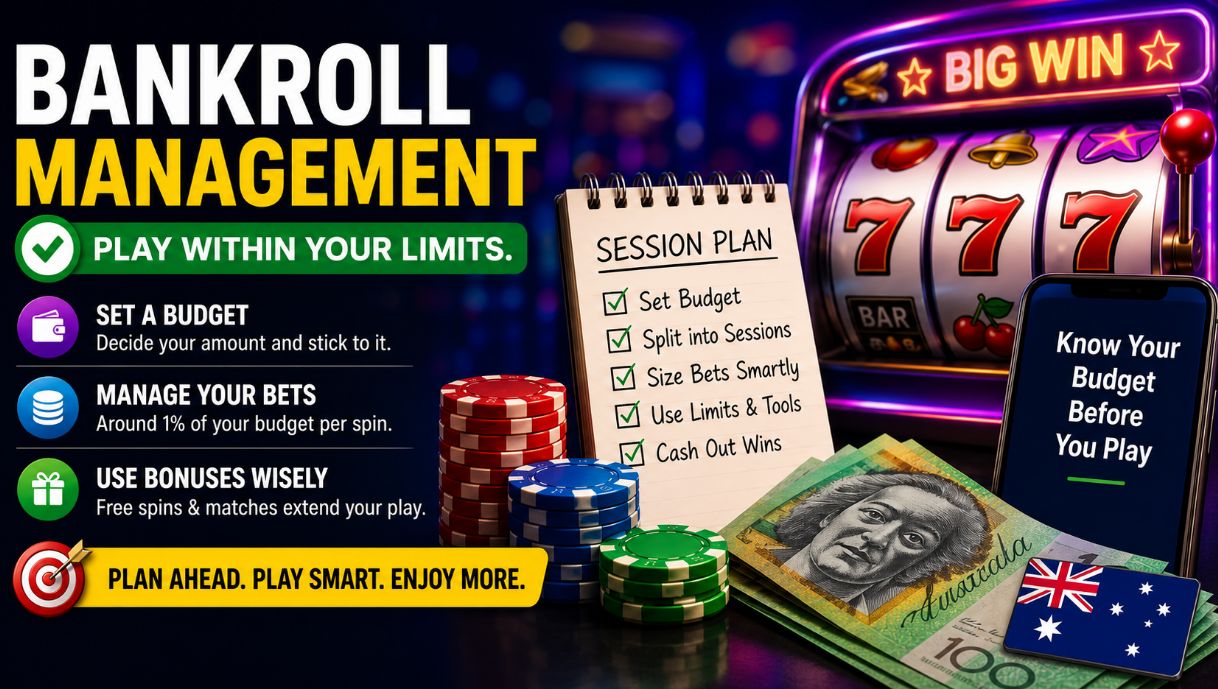
Mastering bankroll management is one of the most important skills any Australian casino player can learn. It is the difference between controlled entertainment and stressful, uncontrolled losses. When you walk into an online or land‑based casino with a clear bankroll plan, you decide in advance how much you are prepared to spend, how long you want to play, and when it is time to walk away. This guide explains how to build that plan step by step for Aussie conditions, from setting a realistic budget to choosing bets and games that fit your bankroll.



What Is a Casino Bankroll?
Your bankroll is the total amount of money you set aside specifically for gambling. It is not your savings account, rent money or grocery budget; it is a separate pool that you are willing to lose without impacting essential bills. Treating your bankroll as an entertainment expense, similar to a night out or a holiday, removes emotional pressure and helps you avoid chasing losses or dipping into critical funds.
For Australian players, this bankroll might be kept in an online wallet, in your casino account, or simply tracked in a spreadsheet. The key point is that once the bankroll is defined, you stick to it. When it is gone, gambling stops until you can comfortably rebuild it, just as you would not keep ordering drinks after emptying your entertainment budget.
Step 1: Set a Realistic Gambling Budget
Bankroll management starts with an honest look at your finances. Decide how much of your disposable income you can afford to lose on gambling each month without harming your lifestyle or causing stress. This amount becomes your monthly gambling budget.
A simple way to think about it:
-
List your income and essential expenses (rent, utilities, debts, food).
-
See how much remains as discretionary spending.
-
Decide what fraction of that you are comfortable dedicating to gambling.
For example, if you have AUD 500 in spare money after bills, you might choose AUD 150 as your monthly bankroll. That figure should feel completely safe—if you lose it all, nothing essential changes in your life. If it does, the number is too high.
Step 2: Break Bankroll Into Sessions
Once you have a monthly bankroll, break it into smaller session budgets. This spreads risk and helps you avoid burning through everything in a single night. Decide how many sessions per week you are likely to play and divide accordingly.
Example:
-
Monthly bankroll: AUD 300
-
Planned sessions: 12 per month (about 3 per week)
-
Session bankroll: AUD 25
With this structure, every time you log in to a casino or visit a venue, your maximum spend is AUD 25. If you lose it, the session ends. If you win, you can decide whether to lock in profits or keep playing with a portion of the winnings, but you do not tap into future sessions’ budgets.
Step 3: Use the Percentage Rule for Bet Sizing
A common rule for long‑term bankroll survival is to risk only a small percentage of your bankroll per bet—usually between 1% and 5%. The idea is simple: smaller bets mean longer playing time and a lower risk of going broke during losing streaks.
If your session bankroll is AUD 25:
-
1% is AUD 0.25 per bet
-
2% is AUD 0.50 per bet
-
4% is AUD 1 per bet
For pokies, that might mean choosing games where you can spin from 25 to 50 cents per spin; for table games, it might mean joining low‑minimum tables. As a rule of thumb, the higher the volatility of the game, the lower your bet size should be within that 1–5% range.
Step 4: Choose Games That Match Your Bankroll
Not all casino games behave the same way. Even with the same bet size, some games will drain your bankroll faster than others because of their volatility (how wildly results swing) and house edge (the built‑in advantage for the casino).
For bankroll‑friendly play:
-
Low‑house‑edge games like blackjack, some forms of roulette and certain video poker variants are better for sustained play.
-
Pokies with lower volatility and adjustable bet sizes let you stretch a small bankroll across many spins.
-
High‑volatility slots can deliver big wins but also long losing streaks; they require a larger session bankroll or smaller bet sizes to manage risk.
Before committing real money, try demo versions where possible or read game info panels for RTP (Return to Player) and volatility indicators. The goal is to match your game choice to your bankroll and your tolerance for swings.
Step 5: Set Win and Loss Limits
Bankroll management is not just about avoiding losses; it is also about protecting wins. Before each session, set:
-
A loss limit: the most you are willing to lose in that session (usually your session bankroll).
-
A win target: a realistic profit point where you will cash out (for example, doubling your session bankroll).
Example:
-
Session bankroll: AUD 25
-
Loss limit: AUD 25 (if you lose it, you stop)
-
Win target: AUD 50 (once you hit AUD 50, you cash out or at least withdraw a portion)
Sticking to these limits turns random sessions into controlled “missions”. You know in advance when the session ends, whether it is through a loss cap or a profit lock.
Step 6: Avoid Chasing Losses
Chasing losses is one of the biggest threats to any bankroll. It happens when you increase bet size or extend sessions to try to “win back” money you have already lost. In practice, this often leads to much larger losses, because decisions are driven by emotion rather than a plan.
To avoid this trap:
-
Treat every session as independent. Once your session bankroll is gone, that story is over.
-
Do not increase bet size out of frustration. Stick to your percentage rule.
-
Remind yourself that gambling outcomes are random; previous losses do not make future wins more likely.
By keeping these principles in mind, you protect both your bankroll and your mindset.
Step 7: Use Casino Tools to Support Your Plan
Many online casinos that accept Australian players offer responsible gambling tools that can reinforce your bankroll plan:
-
Deposit limits to cap how much you can load per day, week or month.
-
Loss limits that stop you playing once you hit a set loss amount.
-
Session timers and reality checks that remind you how long you have been playing.
-
Self‑exclusion and cooling‑off periods if you need longer breaks.
Set these tools to match your planned bankroll and session schedule. For example, if your monthly budget is AUD 300, set a monthly deposit limit at that amount and a weekly limit that matches your schedule. Using tools turns your budget into hard rules enforced by the platform, not just by willpower.
Step 8: Track Results and Adjust
Good bankroll management includes reviewing how things are going. Keep a simple record of:
-
Date and duration of each session
-
Game(s) played
-
Starting bankroll and ending bankroll
-
Net win or loss
Over time, this data shows patterns: which games eat your bankroll, when you tend to overspend, and how your plan performs. If you consistently hit loss limits too quickly, you might need smaller bet sizes or different games. If you are regularly exceeding your monthly budget, your bankroll figure is too high for your circumstances.
Treat bankroll management as an evolving system, not a one‑time decision.
Bankroll Management for Different Player Types
Casual Pokie Players
Casual Aussies who enjoy a few spins after work need a structure that keeps things light:
-
Small monthly bankrolls, spread across many short sessions.
-
Low‑volatility slots with micro stakes (e.g., 20–50 cents per spin).
-
Strict deposit and loss limits to avoid “just one more deposit” habits.
The goal is maximum entertainment per dollar with minimal risk of surprise losses.
Regular Online Casino Players
Regulars who play several times a week should adopt a more formal system:
-
Clear monthly bankroll and session breakdown.
-
Bet sizes tied to a fixed percentage of session funds.
-
Detailed tracking of games, results and time spent.
Over time, this approach helps you see whether your gambling remains affordable and fun or is drifting toward problematic patterns.
High‑Roller or High‑Variance Players
Players who enjoy higher stakes or high‑volatility games like big jackpots or high‑limit tables need even more discipline:
-
Larger overall bankrolls divided into smaller risk units.
-
Strict maximum bet percentages to survive long variance swings.
-
A habit of withdrawing significant wins rather than repeatedly recycling them.
Even for high rollers, the principle is the same: no single session should be able to destroy your entire bankroll.
Bankroll Management at Land‑Based vs Online Casinos
While the core principles are similar, there are some differences between land‑based and online play:
-
Speed: Online games, especially pokies, can be much faster, so bankrolls can vanish quickly without conscious pacing. Using auto‑play carefully or disabling it altogether can help.
-
Access: Online casinos are available 24/7 from your phone, which means more potential sessions. Setting strong time and deposit limits is crucial.
-
Tracking: Online play makes it easier to download or view detailed transaction histories, which is a big advantage for bankroll analysis.
In land‑based venues, cash and chips may feel less “real” than digital balances. Consider carrying only your planned session bankroll in cash and leaving cards or payment apps at home or locked away to avoid extra withdrawals.
Common Bankroll Mistakes to Avoid
Even experienced players slip up. Some of the most common mistakes include:
-
Mixing bankroll with everyday funds: When you treat your main bank account as your gambling balance, it becomes easy to overspend.
-
Ignoring wagering requirements: Big bonuses can lock your bankroll into long wagering cycles that increase risk and reduce flexibility.
-
Constantly raising limits: Deposit and loss limits only work if you do not raise them whenever you hit them.
-
Playing under the influence: Alcohol and fatigue undermine discipline and make it much harder to follow any bankroll plan.
-
Using credit for gambling: Playing with borrowed money dramatically increases risk and can lead to long‑term debt problems.
Recognising these traps early and building rules around them protects both your bankroll and your broader financial health.
Integrating Bankroll Management With Responsible Gambling
Bankroll management and responsible gambling are two sides of the same coin. A solid bankroll plan:
-
Forces you to define what you can afford to lose.
-
Encourages breaks and limits that protect your wellbeing.
-
Helps you spot early signs of harm, such as increasing stakes or budgets to chase a certain feeling or outcome.
If you find that you cannot stick to your plan—regularly exceeding budgets, hiding gambling from family, or feeling anxious when you cannot play – it may be time to step back, self‑exclude and speak to a gambling support service. There is no shame in asking for help; the goal is to keep gambling in its place as optional entertainment, not a constant pressure.
Final Thoughts: Making Your Bankroll Work for You
Mastering bankroll management at casinos in Australia is less about complex formulas and more about clear boundaries, honest self‑assessment and consistent habits. By setting a realistic budget, dividing it into sessions, using percentage‑based bet sizing, choosing games that fit your risk profile and taking advantage of casino tools, you can enjoy pokies and table games without sacrificing financial stability.
The most successful Australian players are not the ones who always chase the biggest jackpots; they are the ones who know exactly how much they are willing to spend, how long they want to play, and when it is time to walk away. With a disciplined bankroll strategy, you give yourself the best chance to keep casino play fun, sustainable and firmly under your control.
FAQ: Bankroll Management at Australian Casinos
What is bankroll management in casino gambling?
Bankroll management is the process of setting a dedicated gambling budget, splitting it into smaller session amounts, and controlling your bet sizes so you can play within your means. It helps you treat gambling as paid entertainment instead of risking money you cannot afford to lose.
How much should I set aside as my casino bankroll?
Only use money you can comfortably afford to lose after all essential bills and savings are covered. Many Australian players allocate a small, fixed portion of their monthly discretionary income—an amount that, if lost, would not affect rent, food, debts or other priorities.
How do I decide the right bet size for my bankroll?
A common rule is to stake only 1–5% of your session bankroll per bet or spin. For example, with a AU$50 session bankroll, bets of AU$0.50 to AU$2 keep you in a safer range and help your bankroll last longer, especially on high‑volatility pokies.
Why should I set win and loss limits?
Win and loss limits give each session a clear endpoint. A loss limit caps how much you can lose before you stop, while a win target tells you when to cash out profits. Together, they reduce emotional decisions, help you avoid chasing losses and make it easier to walk away ahead.
How many sessions should I have per month?
That depends on your bankroll and lifestyle. Break your monthly gambling budget into several small sessions—maybe 2–4 per week—so you are never risking everything in one night. If you find yourself running out of bankroll early in the month, either reduce session frequency or session size.
What tools can help me stick to my bankroll plan?
Most online casinos offer tools like deposit limits, loss limits, session timers, cooling‑off periods and self‑exclusion. You can also use your bank’s gambling blocks or budgeting apps to cap spending. Setting these controls in advance makes it much harder to overshoot your planned bankroll.
Is bankroll management different for pokies and table games?
The principles are the same, but pokies often have faster spin speeds and higher volatility, so it is easy to burn through a bankroll quickly. For pokies, smaller bets and lower‑volatility games are usually better for long sessions, while table games with lower house edges can stretch your bankroll further if you play within limits.
What does “chasing losses” mean, and why is it dangerous?
Chasing losses means increasing your bets or extending sessions in an attempt to win back money you have already lost. It is dangerous because it replaces your bankroll plan with emotional decisions and often leads to even bigger losses, especially in random games where past results do not influence future outcomes.
How do I know if my bankroll is too big or too small?
If losing your monthly bankroll causes stress, affects bills or tempts you to borrow, it is too big and needs to be reduced. If you regularly blow through it in a single session despite sensible bet sizes, you may need to lower stakes, play less often or reconsider whether current gambling habits fit your finances.
When should I seek help about my gambling?
Consider seeking help if you regularly exceed your bankroll, hide gambling from loved ones, feel guilty or anxious about losses, or gamble with borrowed money. Professional support services and helplines can give confidential advice and strategies to regain control over both your bankroll and your overall gambling behaviour.
Sources
- https://au.crazyvegas.com/blog/casino-bankroll-management/
- https://australiangamblers.com/guides/bankroll-management/
- https://highway1.co.nz/australian-real-money-casinos/
- https://poig.org/guides/bankroll-management-guide/
- https://riccardiswoburn.com/smart-bankroll-management-for-aussie-players-practical-strategies-licensing-differences/
Last Updated on July 3, 2026 by Pokie-Player